


Frozen Pipes and Failing Sensors: Is Your Facility Ready for the Deep Freeze?
The arrival of January in the Midwest brings more than just heavy snow. It brings a unique set of challenges for life safety systems. When the “Deep Freeze” hits, the margin for error in your building’s fire and security infrastructure shrinks to zero.
From fluctuating temperatures causing “nuisance alarms” to the catastrophic potential of a frozen sprinkler pipe, winter is the ultimate stress test for any facility. At Midwest Alarm Services, we believe the best emergency response is the one that was prevented in the first place.
Here are the four critical areas where winter weather threatens your facility and how you can stay ahead of the frost.
1. The Hidden Danger of “Dry” Systems
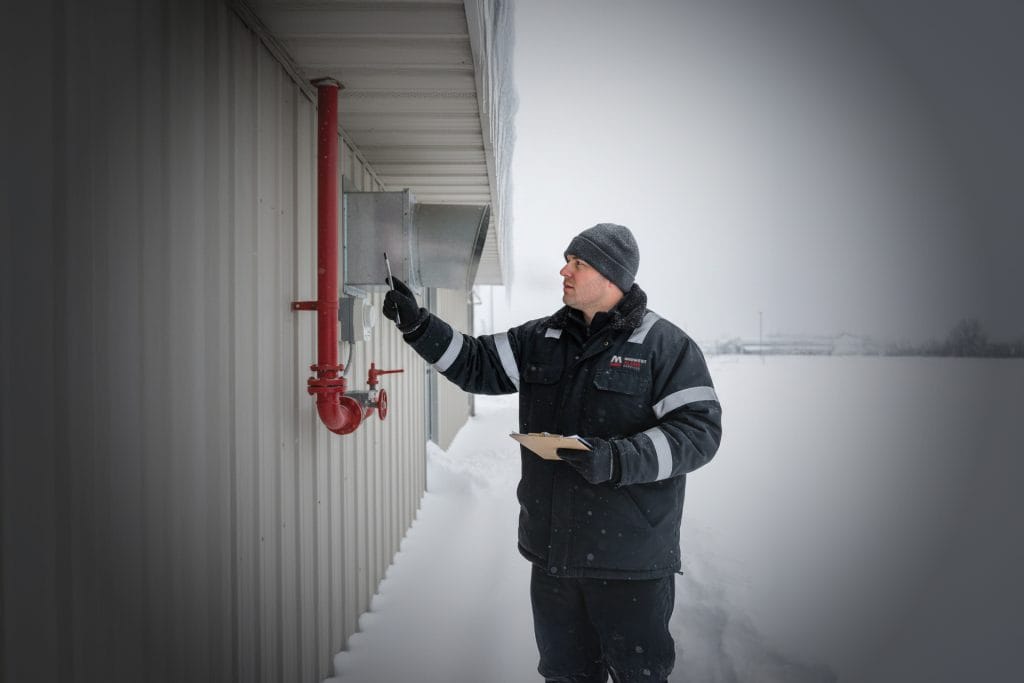
Many Midwest facilities utilize “dry pipe” sprinkler systems in unheated areas like attic spaces, parking garages, or loading docks. While these systems are designed for the cold, they are not “set it and forget it.” Condensation can collect in low points, known as drum drips, throughout the year. If these are not drained before the first hard freeze, that water turns to ice, expands, and can rupture the pipe or trip the dry valve. This leads to a massive and expensive cleanup.
2. Carbon Monoxide: The Silent Winter Threat
As the temperatures drop, boilers and furnaces work overtime. Blocked vents from snow drifts or malfunctioning heat exchangers can lead to Carbon Monoxide (CO) backup. Because CO is odorless and colorless, your detection system is the only thing standing between your occupants and a tragedy. Winter is the most critical time of year to ensure your CO monitoring is interconnected and fully operational.
3. Nuisance Alarms and “The Boy Who Cried Wolf”
Cold, dry winter air is a breeding ground for static electricity and dust movement. These factors can trick older smoke detectors into “false” or “nuisance” alarms. Not only does this disrupt your business operations, but it also creates “alarm fatigue” where occupants start to ignore the sirens. Professional cleaning and sensitivity calibration by a NICET-certified technician can ensure your system only alerts you when the threat is real.
4. The Risks of Incorrect Maintenance
While draining low points is vital, doing it incorrectly can be just as damaging as the ice itself. If a low point is drained without following the proper sequence, you risk accidentally tripping the dry valve and flooding the entire system with water. While a professional service call is an investment, it is far less expensive than the emergency repairs and water damage restoration required after a tripped dry system or a burst pipe.
Don’t Wait for the First Freeze-Up
Your life safety system should not be a source of stress when the weather turns. By being proactive, you protect your property, your budget, and, most importantly, your people.
Download the Midwest Alarm Services Winter Safety Checklist
Don’t leave your compliance to chance this season. We have compiled our decades of Midwest expertise into a single, actionable 15-point checklist to help you audit your facility’s readiness.
Download the 15-Point Winter Safety Checklist Here
Professional Support: Midwest Alarm Services offers Low Point Evaluation and Training. Our experts will visit your site to identify all low point locations and train your team on the exact maintenance procedures required to keep your system dry and functional.
Ready to schedule your evaluation? Contact Midwest Alarm Services today to ensure your team is prepared for the winter months ahead.